Have you ever opened your utility bill, stared at the total for a few seconds, and wondered what exactly changed since last month, even though nothing in your routine feels different? That moment is usually what sends people looking for answers, not because they want to overhaul their house, but because the math suddenly feels personal. Most homeowners are not trying to chase perfect efficiency. They just want the bill to make sense.
The reality is that energy costs creep up quietly. A few extra hours of cooling here, an appliance that never quite shuts off there, and suddenly the monthly total feels heavier than it should. The good news is that there are upgrades that help without turning your home into a construction zone. Let’s take a look.
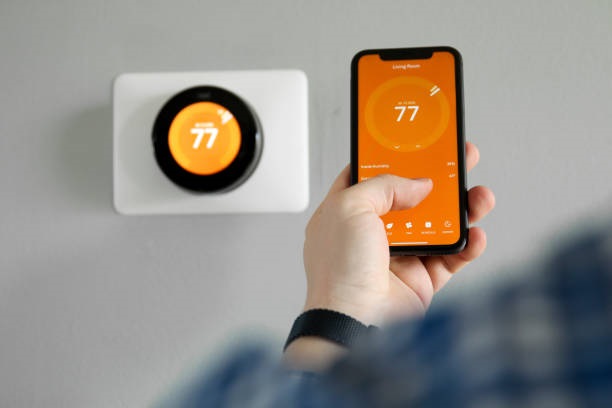
The thermostat tends to fade into the background until something feels off. The house runs longer than expected. The air never quite settles. Or the bill arrives higher than last month, and no one is sure why. That is usually when people realize how much control that small device actually has.
Older thermostats are fine at holding one temperature, but most households do not live at one temperature all day. People leave. They come back. Nights cool down. Afternoons spike. Without adjustment, the system keeps running as if nothing has changed.
Upgrading to a model that allows smarter thermostat temperature control gives the system room to behave more like the house is actually being used. Not perfectly, just better. Most homeowners notice the difference less in dramatic comfort changes and more in how often the system stops running when it does not need to.
Insulation rarely makes the upgrade list because it does not feel visible. You do not interact with it. You cannot point to it and say it looks better. Yet when energy costs stay stubbornly high, insulation is often part of the explanation.
Attics are the usual starting point. Heat builds there, especially in warmer climates, and without enough insulation, it pushes straight into the living space below. Walls and crawl spaces matter too, but attic improvements tend to deliver the clearest results. Homeowners often describe the change as subtle. Rooms feel steadier. The system does not seem as rushed. That is usually insulation doing its quiet job.
Air leaks are easy to underestimate because each one feels minor on its own. A thin draft near a door. A slight gap around a window. Nothing dramatic. Taken together, they allow conditioned air to escape constantly, which means the system works longer to replace it.
Sealing those leaks is one of the few upgrades that feels immediately practical. Caulking and weatherstripping are inexpensive, and the work itself is manageable for most homeowners. After sealing, the house often feels calmer. Less shifting. Fewer temperature swings. It is not a transformation, but it removes a layer of inefficiency that quietly drains energy month after month.
Lighting is one of those areas where the improvement feels almost boring, which is usually a good sign. Switching to LED bulbs does not change how a room looks or feels in any meaningful way. What it changes is how much energy that room quietly consumes every time the lights are on.
The easiest approach is to start where lights get used the most. Kitchens, living rooms, hallways. Outdoor lights, too, since they often run longer than people realize. The savings show up slowly, but they show up. And the reduced need to replace burned-out bulbs is a small convenience that people tend to appreciate more than expected.
Appliances are strange in that they can keep working for years while becoming less efficient with time. A refrigerator that still cools fine might be using far more energy than necessary. The same goes for washers and dishwashers that were built before efficiency standards improved.
Replacing appliances only makes sense when replacement is already on the table. This is not about rushing out to buy something new. It is about choosing efficiency when the old unit finally reaches the end of its useful life. Homeowners often notice quieter operation first. The energy savings follow quietly behind.
Standby power is one of those concepts that sounds technical until you realize how many devices never fully shut off. Televisions, game consoles, computers, and chargers all draw small amounts of power even when idle. Individually, it feels negligible. Together, it adds up.
Smart power strips help manage this without much thought. Once installed, they reduce power draw automatically when devices are not in use. They work best in places where electronics cluster together. Living rooms and home offices are common examples. The upgrade does not change behavior, which is why it tends to stick.
Maintenance is not exciting, and it is easy to delay. Filters get changed late. Tune-ups get pushed back. The system keeps running, so it feels fine. Meanwhile, efficiency slips.
A system that is clean and properly maintained does not have to work as hard to deliver the same comfort. Homeowners often notice smoother operation after maintenance, even if they cannot point to a single reason why. The energy savings come from removing friction. Less resistance. Less strain. Fewer unnecessary cycles.
Lowering energy bills rarely comes down to one big move. It is usually the result of small decisions layered over time. Each upgrade removes a bit of waste. Each improvement makes the house slightly easier to manage. The process is not flashy, but it is effective. And for homeowners who want their energy costs to feel more predictable, that quiet effectiveness is often exactly what they are looking for.

This post has been published by the admin of our website, responsible for content management, quality checks, and providing valuable information to our users.