A maintenance engineer at a German petrochemical plant watched his monitoring screens go dark last March. Lightning had struck 200 meters from the facility perimeter. The direct hit missed every structure, yet electromagnetic pulses crippled three control systems simultaneously. Investigations revealed protection gaps nobody had mapped.
This scenario repeats across European critical infrastructure with uncomfortable regularity. Traditional lightning safety measures stop obvious threats but miss subtler pathways that modern electronics create. Facilities discover vulnerabilities only after expensive failures force post-incident reviews.
Most European sites still rely on risk calculations developed when facilities housed mechanical systems and basic electrical panels. You measure building dimensions, check regional thunderstorm frequencies, plug numbers into standard formulas. The maths works for preventing structural fires and protecting heavy equipment.
Except modern facilities bear little resemblance to those assumptions. Server rooms concentrate millions in assets within tight spaces. SCADA networks link operations across multiple buildings. Solar arrays and wind turbines inject new grounding complexities. Wireless sensors create unexpected coupling paths for transient currents.
A water treatment plant outside Lyon upgraded to automated valve controls three years ago. Lightning protection stayed unchanged. Last summer, a nearby strike induced voltages that fried control boards throughout the facility. Manual operation resumed within hours, but replacement costs exceeded the entire annual maintenance budget. The protection system had worked perfectly by 1990s standards.
Engineers need tools that calculate risk based on what actually exists onsite rather than simplified building profiles. Soil conditions vary dramatically across short distances. Granite bedrock near Scandinavian facilities creates different grounding challenges than clay soils common in the Netherlands. Nearby metal structures, underground utilities, and even tree coverage alter how lightning currents distribute after strikes.
Skytree Scientific built LRA Plus™ to handle these calculations without forcing engineers into oversimplified assumptions. The software accounts for local ground conductivity, internal equipment arrangements, and electromagnetic coupling between systems. You input site-specific measurements rather than generic regional averages.
A Belgian data centre used the platform during expansion planning. Initial layouts placed backup generators adjacent to primary server halls. Risk modelling showed this created coupling paths that conventional analysis missed. Relocating generators 40 metres reduced calculated exposure by 60 percent without adding expensive surge protection.
Lightning safety requires multiple barriers working together. Air terminals and down conductors handle direct strikes. Surge protective devices stop transient overvoltages at entry points. Equipotential bonding prevents dangerous voltage differences between interconnected systems. Shielded cable routes reduce induced currents in signal lines.
Each component needs proper sizing for actual exposure levels. A Scottish wind farm discovered this after repeated inverter failures. Their surge protection met code requirements but couldn't handle the combination of elevated structures and coastal storm intensity. Upgraded devices sized through detailed risk assessment ended the failure cycle.
The challenge lies in optimising across all protection layers simultaneously. Spending heavily on external interception systems whilst skimping on internal surge protection creates gaps. Conversely, excessive internal protection proves wasteful if external systems already reduce threat levels sufficiently.
Risk analysis tools let engineers model how changes ripple through entire protection architectures. Strengthening one element might allow cost reductions elsewhere whilst maintaining overall safety margins. A French pharmaceutical facility used this approach to redesign protection during a building expansion, actually reducing total costs compared to their original compliance-only design.
Risk calculations gather dust unless they inform actual facility management. Lightning safety protocols should drive maintenance schedules, inspection priorities, and operational procedures. High-risk areas need more frequent testing. Critical processes benefit from scheduling during low-threat weather windows. Personnel training focuses on realistic scenarios rather than generic procedures.
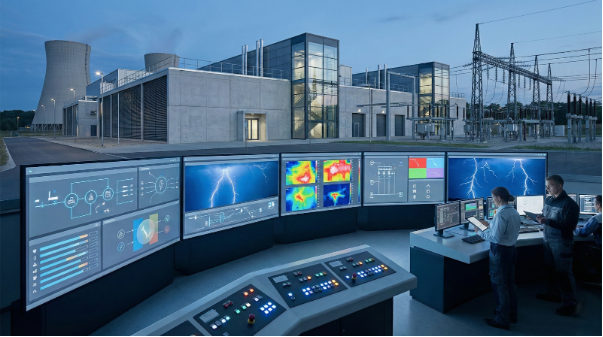
Some facilities now link lightning detection networks with automated response systems. Approaching storm cells trigger equipment shutdowns, data backups, or personnel notifications. These reactive measures work better when calibrated against comprehensive risk profiles that identify which systems face greatest exposure.
A Norwegian offshore platform integrated risk data into their safety management software. Maintenance crews receive automated alerts when inspection schedules slip on high-priority protection components. Operations staff see weather warnings contextualized against facility-specific vulnerability maps rather than generic regional forecasts.
Recent meteorological data suggests lightning patterns across Europe may be shifting. Some regions report increasing strike frequencies. Others see changes in storm intensity distributions. Facilities designed around historical averages may face evolving exposure profiles.
The petrochemical plant from the opening now runs quarterly risk reviews using current site configurations and updated environmental data. Protection upgrades happen proactively rather than after failures force reactive spending. Their safety manager describes the approach as "boring in the best possible way" because nothing dramatic happens anymore.
That's rather the point of sophisticated lightning safety protocols.

This post has been authored and published by one of our premium contributors, who are experts in their fields. They bring high-quality, well-researched content that adds significant value to our platform.