When it comes to upgrading a driveway or outdoor living area in Central Texas, the choice of material is more consequential than it might initially appear. Austin's climate, with its intense summer heat, periodic heavy rain events, and the expansive clay soils that shift with moisture changes, creates conditions that not every paving material handles well. Concrete pavers, when correctly specified and installed, address these challenges in ways that poured concrete slabs often don't.
Understanding what makes pavers a strong choice in this environment, and what proper installation actually involves, helps homeowners make decisions they'll be satisfied with for the long haul.
Working with professional concrete paver installation services that understand the specific demands of Central Texas soil and climate conditions is the starting point for a paver project that performs as well as it looks.
The fundamental difference between a paver system and a poured concrete slab comes down to how each handles movement. Texas clay soils expand when wet and contract when dry. Over the course of a year, with Austin's alternating wet springs and dry summers, this soil movement is significant and continuous.
Poured concrete slabs respond to this movement by cracking. The rigid monolithic structure has no mechanism for accommodating the shifting beneath it, so the stress concentrates and eventually the slab fractures. Once a slab cracks significantly, repair options are limited and replacement becomes the practical solution.
Concrete pavers, by contrast, are individual units set in a flexible bedding layer with sand-filled joints between them. When the soil shifts, the individual pavers can move slightly relative to each other without fracturing. The pattern accommodates movement rather than resisting it to the point of failure. If a section of pavers does settle unevenly over time, those specific units can be lifted, the base material releveled, and the pavers reset without disturbing the rest of the installation.
The longevity and performance of a paver installation is almost entirely determined by what happens beneath the surface. The visible pavers are the finish layer of a system, and a system is only as strong as its foundation.
Proper installation begins with excavation to the appropriate depth for the intended use. A driveway carries vehicle loads and requires deeper excavation and a thicker base than a walkway or patio. The excavated area is then filled with a compacted aggregate base material, typically crushed limestone in the Central Texas context, which provides a stable, well-draining foundation. A bedding layer of coarse sand is then screeded to a precise level before the pavers are set.
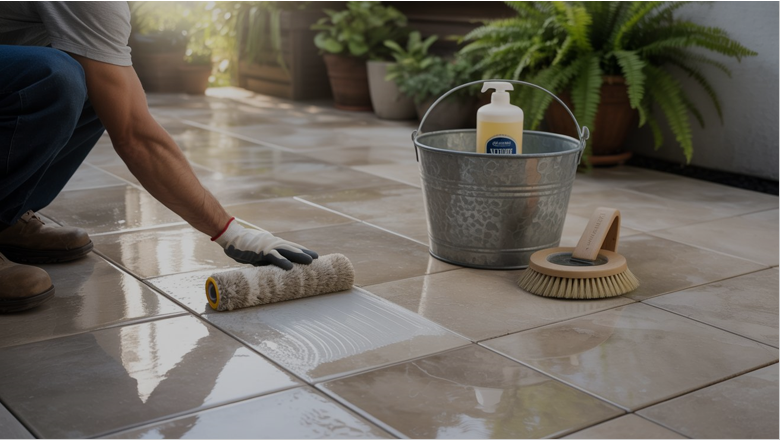
Joint sand is swept between the pavers and compacted to lock the system together. Edge restraints prevent the perimeter units from migrating outward over time. Finally, a penetrating sealer is typically applied to protect the surface and enhance the color of the pavers.
Shortcuts in any of these steps produce pavers that look good initially and then deteriorate in ways that are expensive to correct.
One of the most compelling aspects of concrete pavers is the range of styles, colors, and patterns available. Austin's architectural landscape spans Hill Country ranch, contemporary modern, Mediterranean, and everything in between, and paver selections exist to complement all of them.
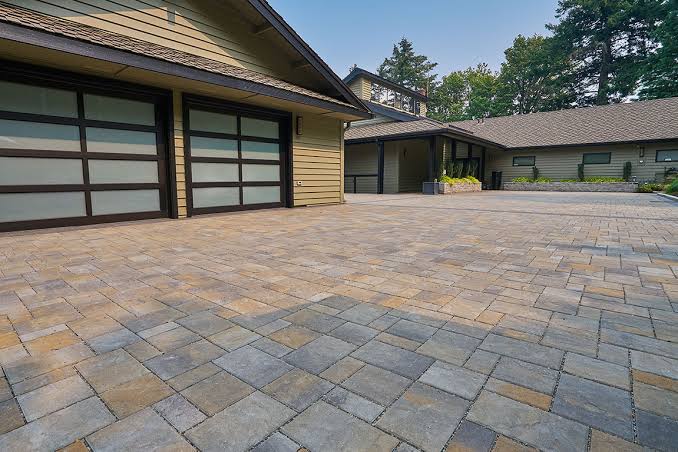
Pattern options include standard running bond, which creates a clean horizontal layout; herringbone, which provides excellent interlocking strength and a classic look; fan or basketweave patterns; and combinations that create borders or transition zones between different areas of the outdoor space. Pavers are also available in a range of earth tones and neutrals that tend to complement Central Texas landscaping.
The ability to mix paver sizes and colors to create custom borders, medallions, or design elements is one of the advantages of pavers over poured concrete, which is limited in its design flexibility once the form is set.
Concrete pavers are often described as low-maintenance, and for practical purposes that is accurate. They don't require the periodic sealing that stamped concrete does to maintain its appearance, though sealing does extend the life of the color and makes the surface easier to clean. Weeds can occasionally establish in the joint sand, particularly in shaded areas, but joint stabilizing sand additives significantly reduce this issue.
The most significant long-term maintenance advantage of pavers is their repairability. Any section that settles, lifts, or is damaged by a heavy impact can be corrected without affecting the surrounding installation. This targeted repairability means a well-installed paver driveway or patio is genuinely a long-term investment rather than a surface with a defined replacement date.
For Austin homeowners looking at a cracked, stained, or unattractive poured concrete driveway, the choice between resurfacing and replacement is worth understanding clearly. If the underlying slab is structurally sound, with no major settling or heaving, concrete resurfacing can dramatically improve its appearance. If the slab is significantly damaged or if the installation was never properly prepared for Texas soil conditions, replacement with a properly installed paver system is the better long-term investment.
A professional assessment by a qualified contractor who regularly works with both materials in the Central Texas environment will give you an honest picture of which option serves your situation best.

This post has been authored and published by one of our premium contributors, who are experts in their fields. They bring high-quality, well-researched content that adds significant value to our platform.