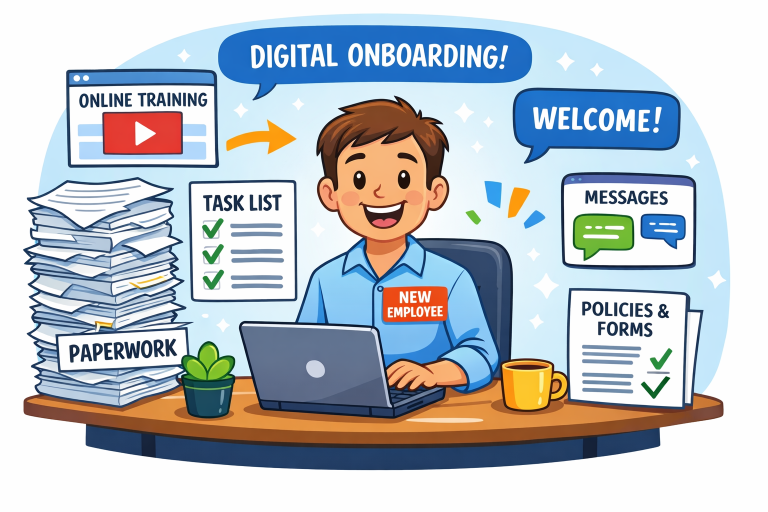
Efficient employee onboarding is vital to thriving in today's rapidly changing business landscape. Companies are increasingly turning to digital solutions to address the pitfalls of traditional onboarding, such as excessive paperwork and slow processing. Leveraging platforms built to support an automated onboarding process not only eliminates manual errors but also ensures that every step is organized and accessible to new employees.
The movement toward digital onboarding is more than a passing trend. It directly improves time-to-productivity for new hires and presents a modern, tech-savvy impression of your company right from day one. As organizations scale, maintaining consistency while personalizing the onboarding journey becomes a challenge that digital tools are uniquely suited to address.
Using integrated onboarding platforms facilitates collaboration among HR, managers, and new employees, creating a transparent, structured process. It also enhances compliance and security by digitizing confidential employee data instead of relying on vulnerable paper files.
With digital onboarding, the first interactions new hires have with your organization can set a positive tone and encourage engagement, leading to higher satisfaction and lower turnover rates.
Digital onboarding brings a variety of tangible benefits to organizations:
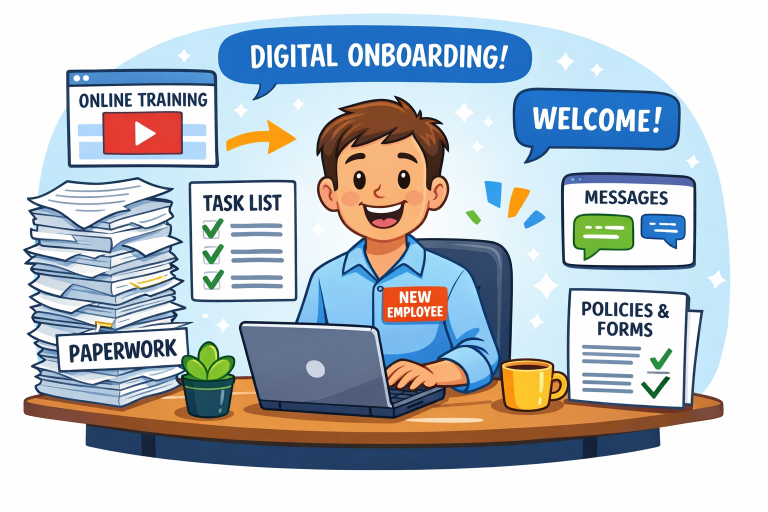
An effective digital onboarding program utilizes several modern tools:
For more on selecting the best digital onboarding software, consult resources like the Society for Human Resource Management (SHRM).
Personalization is at the heart of an effective onboarding process and can be easily implemented through digital channels. Tailoring training material and resources for specific roles, departments, or even individual goals demonstrates a commitment to employee success.
Techniques such as custom welcome messages, one-on-one video calls with team members, and role-specific checklists make new hires feel more included from the start. Personalized goal setting, mentorship pairings, and access to growth opportunities within onboarding platforms provide a sense of direction and value.
According to Harvard Business Review, organizations that personalize employee onboarding see marked improvements in engagement, productivity, and retention.
While digital onboarding systems offer many advantages, organizations may encounter challenges such as technology hiccups, limited IT literacy among employees, or a lack of face-to-face connection.
Addressing these hurdles involves investing in robust technical support and intuitive platforms with user-friendly interfaces. Scheduling regular virtual meet-and-greet sessions, welcome calls, and interactive video coffee chats can bridge the gap between digital convenience and the need for personal human interaction.
For example, a mid-sized technology company implemented an all-in-one digital onboarding system to replace their previous paper-centric approach. The switch cut onboarding time by 40 percent and boosted new hire retention by 25 percent in a single year. By digitizing the process, employees completed forms online, engaged with interactive training, and joined company-wide communication channels within their first week. The team dedicated more time to mentorship, resulting in a stronger organizational culture and greater long-term retention.
Digital onboarding is rapidly evolving. The future includes further integration of artificial intelligence, such as chatbots that answer questions 24/7, and adaptive learning systems that adjust content based on user progress. Virtual reality (VR) is becoming popular for immersive company tours and hands-on training, especially for remote or global teams.
These future advancements will drive efficiency and create memorable, impactful onboarding experiences for employees worldwide. To stay ahead, organizations should regularly evaluate and adopt new technologies that align with their business needs and goals.
Digital onboarding is an investment in your company’s talent and culture. Embracing innovative tools ensures a smoother onboarding journey, improved engagement, and retention rates for new employees. By carefully selecting the right technologies and personalizing each step, companies can foster a positive, productive atmosphere from day one.

Ameer Hamza is a versatile content creator with a strong interest in researching and writing on a wide range of topics. His work spans technology, business, health, travel, lifestyle, education, entertainment, finance, and digital trends. He focuses on transforming complex information into clear, engaging, and easy-to-understand content that provides practical value to readers. By relying on credible sources and thorough research, Ameer strives to produce accurate, informative, and up-to-date articles that help readers stay informed and make better decisions.