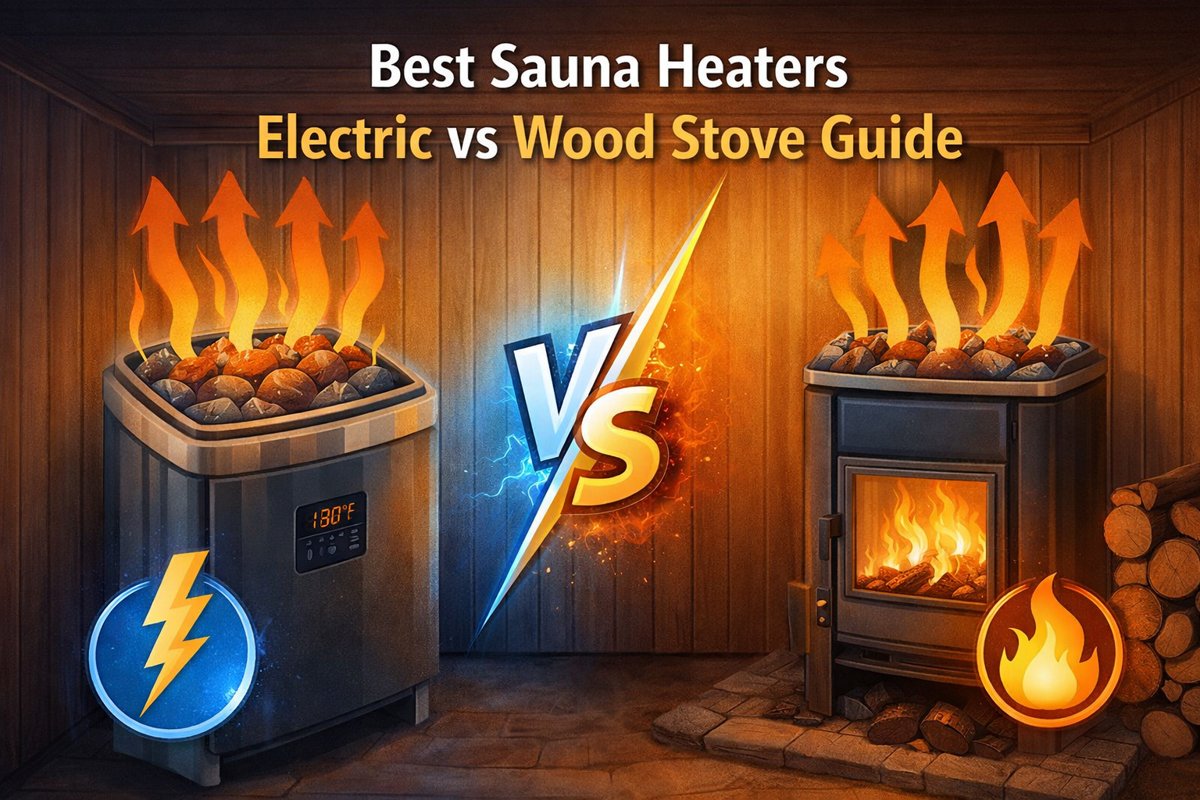
Choosing a sauna heater is not just about reaching a target temperature. The heat source shapes how quickly the room warms up, how much maintenance is required, what installation work is involved, and how the sauna feels in daily use.
For many buyers, the real question is not whether one option is universally better. It is which system fits the space, the household, and the way the sauna will actually be used. Some owners want quick weekday sessions with simple controls. Others want a slower, more traditional ritual with the sound and scent of a live fire.
This guide compares electric sauna heaters and wood-burning sauna stoves across the factors that matter most: performance, safety, installation, operating costs, and user experience. It also explains where health claims should be treated carefully. Sauna bathing may support relaxation and cardiovascular health, but evidence is stronger for some outcomes than others, and safe use still matters. Research reviews and guidance from Harvard Health, Mayo Clinic, and CDC materials provide useful context on both benefits and risks.
Home sauna interest keeps growing, but buyer confusion has grown with it. Product pages often focus on wattage, stone capacity, or visual design, while the bigger ownership questions get less attention. How much ventilation is needed? How difficult is chimney planning? How much attention will every session require? What safety measures are non-negotiable?
That is why comparing heater types matters more than comparing brands too early. The heat source determines the overall system. It affects electrical planning, floor protection, clearances, airflow strategy, and long-term upkeep. In practice, a well-matched heater often matters more than chasing extra features.
This is also where many readers begin searching for the best sauna heaters electric models or researching wood-burning sauna stoves. Those search terms usually point to a deeper decision about lifestyle and site conditions, not just equipment. Starting with the use case helps narrow the field quickly and realistically.
An electric sauna heater uses heating elements to warm sauna stones and the room air. It is controlled by an onboard or wall-mounted controller, and it usually offers the simplest path to predictable, repeatable heating. In a home setting, that means easier preheating, straightforward temperature adjustment, and less day-to-day effort.
A wood-burning sauna stove creates heat by burning firewood in a firebox, which heats the stove body and stones. This produces a more hands-on process. The operator builds and manages the fire, monitors burn behavior, and plans around chimney draft and fuel storage. For many sauna owners, that work is part of the appeal rather than a drawback.
Neither system is inherently more “authentic” for every setting. Electric heat is often the practical fit for indoor residential projects and routine use. Wood heat often fits off-grid sites, outdoor sauna cabins, and owners who want a more traditional atmosphere. The right answer depends on the building, the local code environment, and the owner’s habits.
Electric heaters usually offer the more predictable heat-up curve. Once properly sized for the room, they can bring a sauna to bathing temperature with little intervention. Good controls also make it easier to hold a consistent range over the session.
That consistency matters for households that use the sauna several times a week. A user can start preheating, return when the room is ready, and make small temperature adjustments without changing fuel load or airflow. This convenience is one reason many people begin their search with best sauna heaters electric queries rather than broader heater research.
In practical terms, electric heat often works best for owners who value convenience, routine scheduling, and lower session friction. It is especially useful in indoor spaces where smoke venting and wood handling would be impractical.
Wood-burning systems usually require more time and more attention before the sauna is ready. Fire starting, wood quality, chimney draft, and outdoor conditions all affect performance. Heat can be excellent, but it is less automatic.
That said, many bathers prefer the feel of a wood-fired session. The warming cycle can feel softer and more gradual, and the fire adds sensory character that electric systems do not replicate. Well-designed wood-burning sauna stoves can also produce strong, satisfying löyly when paired with the right stone load and ventilation design.
For users who enjoy preparation as part of the sauna experience, that extra effort may feel worthwhile. For users trying to fit a session into a tight weekday routine, it may not.
A sauna is not defined by dry heat alone. The quality of the steam created when water is ladled onto the stones matters just as much. Stone capacity, heater design, and airflow all shape that result.
Electric heaters can produce excellent steam when they are properly sized and loaded with the right stones. Higher stone volume often improves the softness of the heat and the quality of the steam burst. In many modern designs, the difference in bathing comfort between electric and wood can be narrower than people expect.
Wood-fired systems, however, often create a more layered atmosphere. There is radiant heat from the stove, the visual presence of the fire, and the sensory effect of burning wood. Many sauna owners describe the room as feeling more alive. That is subjective, but it is a real part of why wood-burning sauna stoves remain popular even when electric options are easier to live with.
The decision here is less about technical superiority and more about the kind of session the owner wants to repeat over time.
Electric heaters require adequate electrical capacity, correct circuit sizing, compatible controls, and code-compliant installation. In many homes, this is the simpler path because it avoids flue construction and wood storage. But “simpler” does not mean casual. Sauna heaters are high-load appliances, and sizing mistakes can affect both safety and performance.
Indoor projects often favor electric because the infrastructure is easier to integrate into finished homes, basement builds, and spa-style additions. It is also easier to maintain a cleaner envelope without ash, smoke, or fuel handling.
Wood-fired sauna systems demand more from the structure. The design must account for chimney routing, heat shielding, floor protection, clearances to combustibles, combustion air considerations, and safe ash handling. Local code and inspection requirements may also be more involved.
This is where romantic expectations sometimes run into practical limits. A wood-fired sauna can be outstanding, but it needs the right setting. It is usually a better fit for detached outdoor buildings, cabins, or sites where chimney design and fire safety planning can be handled properly from the start.
Both heater types can be safe when correctly installed and operated. Both can also become risky when buyers underestimate the basics.
Electric heaters raise the risk of burns from hot surfaces and can become hazardous if clearances, wiring, controls, or timer functions are mishandled. Water should only be used as intended by the heater manufacturer, and textiles or stored items should never be placed near the unit.
Wood-fired systems add combustion-related hazards. Fire risk, improper venting, and carbon monoxide exposure make professional planning essential. The CDC warns that carbon monoxide poisoning can result from fuel-burning appliances and stresses the importance of proper venting and working CO detectors.
For the user, safe sauna bathing also means session discipline. Mayo Clinic notes that dehydration is a real concern when fluid losses are not replaced, and Harvard Health advises extra caution for people with unstable heart conditions or uncontrolled blood pressure.
Sauna content often drifts into overstatement. The strongest responsible position is more measured.
Research reviews suggest that regular sauna bathing is associated with cardiovascular and other health benefits, including lower rates of some heart-related outcomes in observational studies. But association is not the same as proof of cause, and not every popular claim has strong evidence behind it. Reviews in PubMed and NIH sources note promising findings, while also pointing out that many claims remain incomplete or need better-quality evidence.
Harvard Health summarizes this carefully: population studies suggest that people who use saunas regularly tend to have lower rates of heart disease, but researchers are still working out how much of that relationship is causal.
That means sauna planning should focus first on safe, sustainable use. A good heater supports regular, comfortable bathing. It should not be marketed as a cure-all. Reliable benefits are most closely tied to relaxation, heat exposure, and consistent routine, not exaggerated detox claims or dramatic promises.
Electric sauna heaters generally ask less from the owner after installation. Maintenance usually centers on periodic stone inspection, replacing damaged stones, checking heater condition, and keeping the room clean and dry between uses. There is no ash, no chimney cleaning, and no fuel storage.
Wood-fired saunas require more regular care. Firewood must be dry and properly stored. Ash must be removed safely. Chimneys and flue paths need inspection and cleaning. Burn behavior should be monitored over time because draft problems or soot buildup can affect safety and performance.
That does not make wood ownership a poor choice. It simply means the user should want that responsibility. For many buyers, convenience decides the matter. For others, the rhythm of tending a fire is exactly why a wood sauna feels rewarding.
Operating costs depend on local electricity prices, firewood availability, insulation quality, climate, and how often the sauna is used. There is no universal winner.
Electric heating may cost more per session in areas with high power rates, but it can save time and reduce maintenance labor. It also avoids expenses tied to chimney service and fuel logistics.
Wood heat may be economical where firewood is affordable and readily available, especially in rural or cabin settings. But buyers should count the full picture: chimney materials, protective construction, ongoing cleaning, and the value of the time spent managing fuel.
Long-term value comes from matching the heater to realistic use. A heater that fits the owner’s habits is more likely to be used consistently and maintained correctly. A technically impressive system that feels inconvenient often becomes an expensive underused feature.
These are the situations where searches for the best sauna heaters electric models usually make the most sense. The goal is dependable heat with minimal friction.
This is where wood-burning sauna stoves often stand out, especially for owners building a destination-style sauna rather than an everyday convenience feature.
One of the most common mistakes is choosing a heater before confirming room volume, insulation level, and ventilation design. An undersized heater struggles. An oversized heater can create control and comfort issues if the rest of the room is poorly planned.
Another mistake is focusing on headline temperature rather than bathing quality. Fast heat is useful, but stone capacity, airflow, and room design often matter more to comfort than a raw maximum number.
The last major mistake is underestimating safety infrastructure. Electric systems need correct wiring and clearances. Wood systems need correct venting, floor protection, and carbon monoxide precautions. A sauna heater is part of a heat system, not a standalone accessory.
The better sauna heater is the one that fits the space, the routine, and the owner’s willingness to manage the system well.
Electric heaters usually win on convenience, control, and ease of ownership. They are often the strongest match for indoor residential projects and for users who want dependable sessions several times a week. Wood-fired stoves offer a more involved and often more atmospheric experience, but they demand the right setting and a higher level of operational attention.
For most homeowners, the decision becomes clear after a simple question: should the sauna feel effortless, or should it feel ritualized? Answer that honestly, then size and install the heater accordingly. That approach leads to a better result than chasing trends, and it is the most practical way to choose between the best sauna heaters electric options and traditional wood-burning sauna stoves.

This post has been authored and published by one of our premium contributors, who are experts in their fields. They bring high-quality, well-researched content that adds significant value to our platform.