Key Takeaways
Building your own gaming PC has become more accessible than ever, allowing gamers to attain a tailored experience that mass-produced machines often can’t match. Not only does assembling a custom rig put you in control of every specification, but it also provides a valuable learning opportunity and a sense of achievement. Whether you’re chasing ultra-smooth frame rates at max settings or aiming for a visually striking setup, there are key best practices to follow. For those seeking a blend of customization and convenience, resources like CyberPowerPC offer inspiration and options to jump-start your project.
Navigating the vast array of hardware choices, evolving trends, and technological jargon can be overwhelming, but a strategic approach can help you maximize both performance and value. The foundational components you select will shape your entire gaming experience, from the games you can play to your machine’s future upgradability and aesthetics. Building with a clear plan also ensures that your setup is unique to your preferences, from RGB lighting schemes to custom cooling solutions.
With so many variables at play, focusing on the most influential factors helps ensure a satisfying result without unnecessary overspending. Keeping an eye on industry innovations and thinking ahead to future upgrades further safeguards your investment, enabling your gaming PC to stay relevant as new titles and technologies emerge. In the following guide, we’ll break down the essential steps and considerations to help you turn your vision into a reality.
To fully harness your build’s potential, staying up-to-date with emerging hardware architectures and standardizing on reliable, scalable components is essential. Beyond performance, personal touches such as custom cable management and themed aesthetics add a layer of enjoyment, letting your PC reflect your personality and style.
Prioritizing Key Components for Optimal Performance
The components you choose will directly impact your PC’s performance and longevity. Start by allocating a significant portion of your budget toward the graphics processing unit (GPU) and central processing unit (CPU). These two components are primarily responsible for the heaviest lifting in modern games, affecting both graphical fidelity and gameplay smoothness.
Making informed choices about these components ensures you get the best possible performance without bottlenecking your system’s capabilities. Matching your CPU and GPU, for instance, prevents either one from holding back the other’s full potential.
Staying Updated with Hardware Trends
The gaming hardware landscape evolves quickly, with new generations of GPUs and CPUs emerging annually. Platforms such as AMD’s Zen 4 architecture and Intel’s Raptor Lake series are pushing boundaries by providing exceptional multitasking and high single-threaded performance, both of which benefit gamers and content creators alike. Increased core counts, power efficiency, and compatibility with fast new standards like DDR5 RAM and PCIe 5.0 future-proof your investment.
Beyond performance leaps, trends such as AI-driven upscaling (e.g., NVIDIA DLSS or AMD FSR), smaller manufacturing processes, and smarter cooling solutions are also reshaping the PC gaming market.
Implementing Effective Cooling Solutions
Efficient cooling is essential for both maximizing your gaming PC’s performance and ensuring its long-term reliability. Components running at high temperatures are more prone to thermal throttling, which reduces speeds to protect hardware at the cost of performance.
Enhancing airflow through effective cable management and dust filters also reduces maintenance and improves performance. For advanced builds, custom or AIO liquid cooling can offer both superior cooling and striking aesthetics.
Personalizing Your Build with Aesthetics
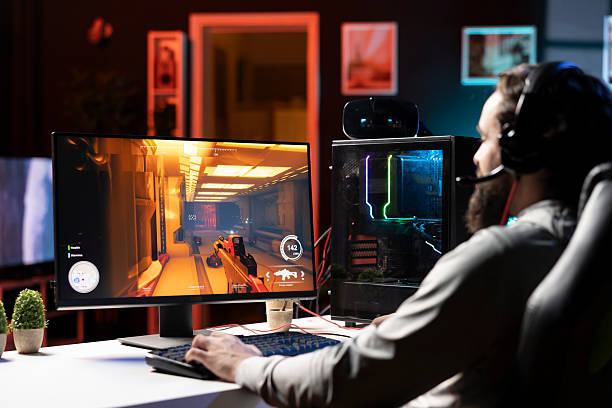
Today’s gaming PCs are as much about looks as performance. RGB lighting, custom cable sleeves, tempered glass panels, and even themed paint jobs let you turn your rig into a showpiece. Popular software ecosystems enable synchronization between your PC’s lighting and your game or music, enhancing immersion.
Tidy cable management serves a dual purpose: it improves airflow and provides a cleaner look. Many PC builders use cable combs or custom-length cables to further enhance the appearance of their builds.
Planning for Future Upgrades
One of the key advantages of a custom gaming PC is upgradeability. Select a motherboard with extra RAM slots, M.2 sockets, and support for the newest connectivity standards. Consider a power supply with a bit more headroom and a spacious, modular case that can accommodate next-generation GPUs or additional storage.
Opting for components built on new platforms ensures that you won’t face compatibility hurdles for future upgrades, allowing your system to evolve alongside new hardware launches and your changing needs.
Conclusion
Building a high-performance custom gaming PC is a strategic blend of technical know-how, personal expression, and forward-thinking. By emphasizing performance-critical components, staying attuned to ongoing hardware advancements, and integrating strong cooling and unique aesthetics, you create a system designed for both today’s demands and tomorrow’s opportunities. Thoughtful planning from the outset ensures that your dream gaming rig is not just a device, but a platform for years of immersive play and creative achievement.

This post has been published by the admin of our website, responsible for content management, quality checks, and providing valuable information to our users.


