Water heaters are central to daily comfort, delivering hot water for showers, laundry, dishwashing, and more. However, routine use means that issues can and do arise, impacting convenience and sometimes home safety. Recognizing frequent water heater challenges and knowing the right remedies is crucial to maintaining performance and extending your unit’s lifespan. Whether you’re a seasoned homeowner or a new occupant, learning about maintenance and practical fixes can help you avoid costly breakdowns and keep your system running efficiently. If you're uncertain about tackling a repair, reach out to trusted water heater plumbers in Hallettsville TX for reliable and expert service to restore your comfort quickly.
Water heater troubles can often begin subtly, such as strange noises or lukewarm showers, but when left unchecked, they may escalate into more complex and expensive repairs. Proactive prevention, timely diagnosis, and occasional professional intervention make a significant difference. Below is a comprehensive guide on identifying, troubleshooting, and addressing the most frequent water heater problems.
Few things are as unpleasant as stepping into a cold shower expecting soothing warmth. If your water heater suddenly delivers no hot water at all, the problem usually involves faults in the thermostat, heating element, or (in gas units) the pilot light. For electric models, a tripped circuit breaker is a common culprit, while gas heaters might suffer from pilot outages or gas supply issues.
Solution: First, check your electrical panel for a tripped breaker. In the case of gas units, confirm that the pilot light is lit, and follow manufacturer instructions for relighting if needed. When neither step restores hot water, it’s likely that the thermostat or heating elements require professional assessment or replacement.
When your water heater runs out of hot water too quickly or struggles to reach comfortable temperatures, several common issues could be to blame. An undersized tank might not meet household needs, sediment can accumulate at the bottom of the tank, or a malfunctioning dip tube can allow cold water to mix with the hot supply prematurely.
Solution: Review your family’s hot water usage to see if the tank is adequately sized. Flushing the tank at least once a year helps remove sediment, which boosts efficiency. If your dip tube is broken or missing, replacing it can resolve temperature inconsistencies and restore proper water stratification.
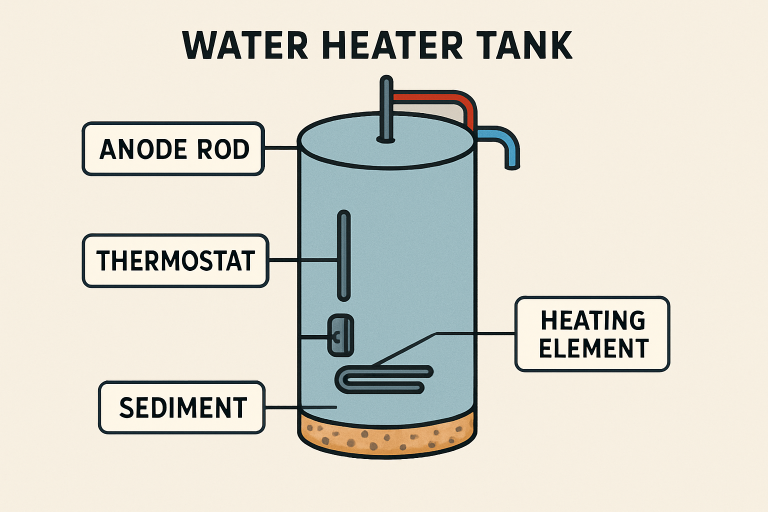
Rust-tinged water or an unpleasant odor are two signs your water heater might be experiencing internal corrosion or bacterial growth. A corroded sacrificial anode rod often allows rust to form, and stagnant water breeds bacteria that can emit a rotten egg smell, especially in homes with well water.
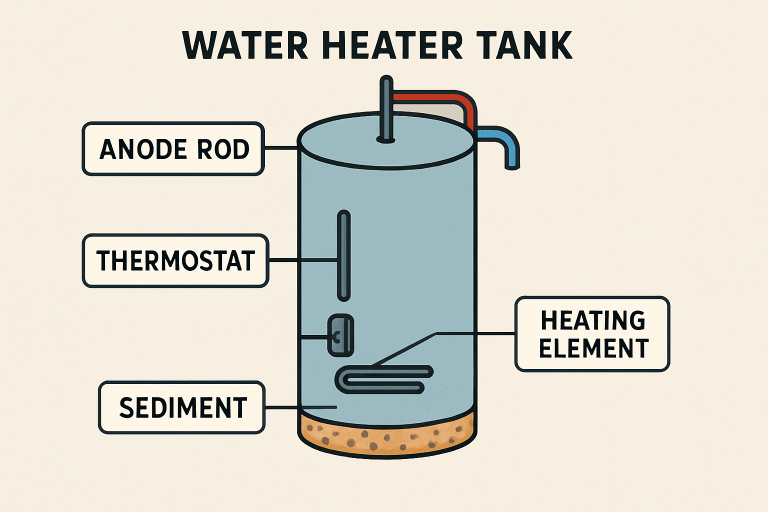
Solution: Flush the tank thoroughly to remove built-up rust and bacteria. Inspect the anode rod every two to three years, replacing it when it’s heavily corroded. Persistent odors may indicate the need for a stronger remedy or, in some situations, a whole-house water filtration system.
Banging, popping, or rumbling sounds emanating from your water heater are warning signs that sediment is accumulating at the tank’s base. These sounds result from water trapped beneath layers of sediment suddenly turning to steam and bursting upward, sometimes damaging the tank and reducing its efficiency.
Solution: Regular flushing, ideally performed once a year, will help prevent and resolve this problem. If noises persist after a thorough cleaning, inspect the heating element for signs of wear or damage, as replacement may be necessary.
Puddles of water near your heater are a cause for quick action, as leaks left unchecked can cause water damage, mold growth, and even structural problems. Often, leaks trace back to loose connections, faulty pressure relief valves, or, more seriously, internal tank corrosion.
Solution: Check all plumbing connections and tighten if loose. Replace leaking valves with new ones. Unfortunately, a corroded tank itself cannot be reliably patched and will require complete replacement to prevent flooding or further home damage.
If you find your water shifting from hot to cold and back again without explanation, underlying causes often include a malfunctioning thermostat, broken dip tube, or improper plumbing cross-connections mixing cold and hot water unexpectedly.
Solution: Calibrate or replace the thermostat if settings do not reflect the actual temperature. Replace the dip tube if it is allowing cold water to settle at the top of the tank. It’s also a good idea to have a plumber check your system for cross-connections that may inadvertently route cold water to your hot taps.
Gas water heaters rely on a steady pilot light for operation. When it refuses to stay lit, a faulty thermocouple (the safety device that senses the pilot flame), interrupted gas supply, or poor ventilation may be to blame.
Solution: Ensure the thermocouple is both properly positioned and intact. Clean or replace it as needed. Verify that the gas line is open and clear, and clear away any obstructions around the heater itself. Recurring issues should be examined by a licensed plumber, as gas repairs involve safety concerns.
Proper maintenance prevents breakdowns and maximizes the life expectancy of your water heater. Even simple checks can catch issues before they escalate:
By making these steps routine, you reduce your risk of emergencies and expensive repairs. Taking the time to address issues at their onset and keeping up with yearly inspections keeps your water heater functioning efficiently and reliably for years to come.

This post has been authored and published by one of our premium contributors, who are experts in their fields. They bring high-quality, well-researched content that adds significant value to our platform.