Key Takeaways:
Table of Contents:
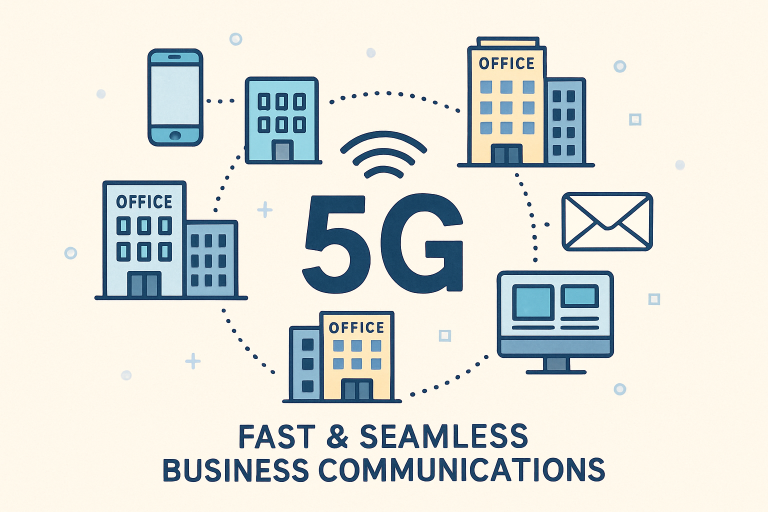
The rollout of 5G connectivity marks a pivotal moment for global business communications. With dramatically improved speed, reduced latency, and higher connection density, companies now have opportunities to revolutionize everything from daily operations to broader strategic initiatives. As organizations seek to leverage this shift, 5G solutions from MetTel are becoming increasingly popular, helping businesses harness next-generation connectivity to gain a competitive edge.
From small firms optimizing their remote work capabilities to Fortune 500 brands piloting smart technology on production floors, 5G connectivity is driving new solutions and operational efficiencies. The promise of real-time data transfer and robust cloud access is already changing not just how organizations communicate, but also how they collaborate, innovate, and serve customers.
While the early adopters of 5G are already seeing transformative results, the full impact of 5G connectivity is only beginning to unfold. Business leaders must evaluate what this means for their unique operations and anticipate both the opportunities and challenges that come with such a foundational shift. Organizations that prepare thoughtfully are poised to vault ahead as this evolution continues.
5G is not an isolated trend but a catalyst for sweeping digital transformation across different sectors. Many experts argue that it will serve as a key enabler for the technologies that will define the next decade, including automation, the Internet of Things (IoT), and artificial intelligence.
One of the most celebrated advantages of 5G technology is its nearly instantaneous speed and higher reliability. Compared to older mobile networks, 5G delivers data transfer rates of up to 10 gigabits per second, meaning documents upload in seconds, high-resolution video conferences experience little to no lag, and applications that previously struggled with delays now run smoothly.
Businesses that rely on time-sensitive data streams, such as those in logistics or finance, can benefit from reduced latency. When actions are processed in real-time, everything from interactive customer support to automated supply chain tracking becomes more efficient and accurate. Organizations implementing cloud-based business tools find they perform more consistently, resulting in less downtime and improved productivity.
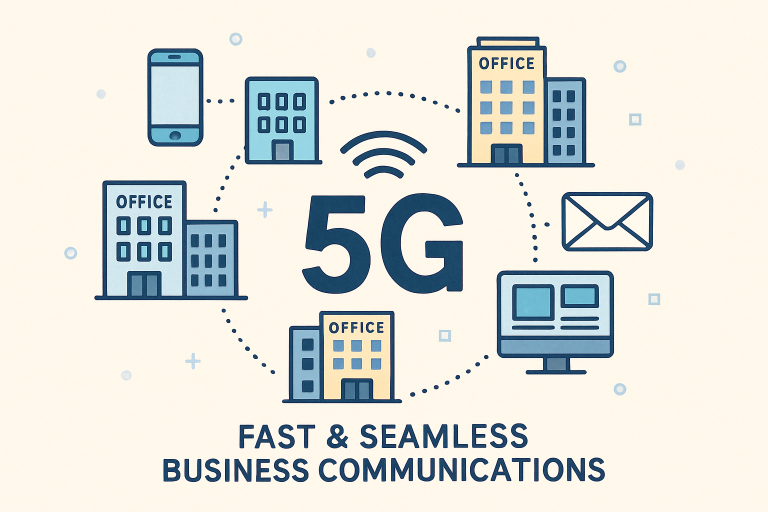
The adoption of hybrid and remote work models is one of the most significant business shifts in recent years, a trend catalyzed by global events and further enabled by 5G. This technology breaks down the barriers that once limited remote collaboration, enabling employees to connect globally over stable, ultra-fast networks. Video meetings are clearer and more interactive, large file transfers without error, and mission-critical applications are accessible anywhere, at any time.
The transition to widespread 5G will make remote and hybrid work not just possible but more productive and secure, especially for teams operating in less urban areas. Businesses can expand their talent pools by hiring from anywhere without worrying about connectivity issues that could hinder performance.
5G is a game changer for several major industries, each capitalizing on its unique benefits in distinct ways.
Despite its advantages, 5G also introduces new vulnerabilities. The sheer number of new devices and connections means a much broader “attack surface” for cybercriminals. Organizations must be proactive, deploying multi-layered defense strategies and ensuring all connected endpoints are adequately protected. Advanced encryption, frequent patching, and user training are essential practices.
Securing a 5G network means integrating cybersecurity best practices at every stage of device and network setup, and continuing to monitor for threats as the environment evolves. Governments and industry leaders are also collaborating to update regulations and establish interoperable security standards as 5G becomes the backbone of business operations.
To achieve a seamless transition to 5G and realize its full potential, businesses should approach integration in a structured manner.
By taking these steps proactively, organizations can be ready to deploy 5G capabilities as soon as they become available and gain a competitive advantage over slower-moving peers.
5G connectivity is redefining what is possible in business communications. Faster speeds, better reliability, and robust support for emerging digital tools are only the beginning of the transformation. From enhancing remote work to enabling smart automation and intelligent services, businesses that embrace 5G early will find themselves leading rather than following into the next era. Preparing now by upgrading infrastructure, investing in employee training, and securing networks enables full capitalization on this new landscape, driving success and innovation in the digital age.

This post has been authored and published by one of our premium contributors, who are experts in their fields. They bring high-quality, well-researched content that adds significant value to our platform.