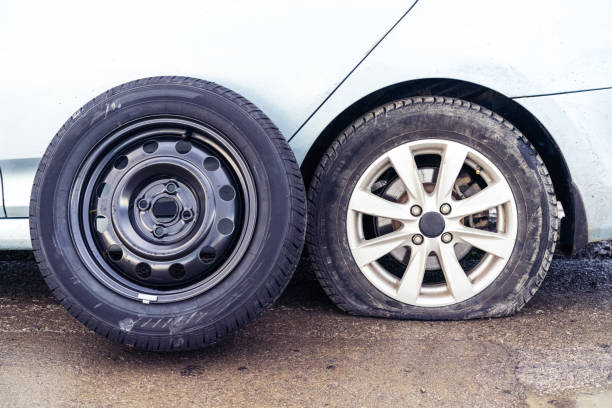
Run-flat tyres are the vehicle tyres that are equipped with strengthened sidewalls to support the weight of a vehicle even if the tyre is punctured. These tyres provide temporary mobility to the vehicle; in this way, the drivers can cover a short distance to the service station and save money to repair it rather than being stranded. After the puncture, these tyres allow for a distance of 50 miles up to a speed of 50 mph. These tyres provide a temporary functionality to the vehicle so a person can reach a safe location.
The advantages of run-flat tyres are discussed below.
The run-flat tyres provide safety to a person in cases of puncture at a place that is unsafe to reach a safe space and get repaired. These tyres help in maintaining better control of the vehicle.
These tyres are a convenient source of travelling when a person faces accidental punctures. These tyres enable a person to reach a service station where they can get them conveniently changed and eliminate the hustle that can be faced at the roadside.
These tyres are best for saving space because the durability of these tyres eliminates the need for putting a spare tyre in; this way, it frees up space in the car’s trunk.
These tyres are reliable as compared to conventional tyres in cases of puncture incidents, as these reduce the risk of being stranded in an unsafe place.
These tyres are often equipped with advanced features, including tyre pressure monitoring systems that allow the normal handling of tyres in case of deflation and enhance the safety and performance of these tyres.
It is essential to consider the disadvantages of run-flat tyres to choose the best one. The disadvantages of run-flat tyres are discussed below.
The good quality of run flat tyres is more expensive than the standard tyres, and these cannot be repaired after an incident. So, a person is not able to repair these tyres after a single puncture.
After the puncture, the additional weight of the run flat tyres and their sidewalls can lead to increased rolling resistance that will lead to the excessive consumption of fuel, and the ride was also not smooth, mainly over the bumps.
The different construction of these tyres is prone to uneven wear patterns that can lead to a shorter life span, up to an average of 6000 miles, sooner than conventional tyres.
The thin flat tyres are not readily available at all the places, which causes delays in repairs and replacement of the tyre, and they don’t come with a spare tyre, which can lead to issues if a driver is unable to resolve the issues with the abilities of run flat tyres.
These tyres can negatively impact the handling of a vehicle and its responsiveness by making the vehicle feel less agile and creating a stiffer ride, which reduces the comfort and shock absorption.
The run-flat tyres look similar to the standard tyres, but they consist of several layers and components that are designed to provide stability and protection in case of a puncture incident. These tyres have armoured sidewalls that allow a punctured tyre to remain firm without the pressure of air to continue, and the support of the car over a span of time. When the tyre completely loses pressure, this prevents the tyre from collapsing and continues to hold the tyre in the rim.
In conclusion, run-flat tyres have both potential advantages and disadvantages. These tyres provide safety and security in cases of punctures at unsafe places and help the driver by not leaving them stranded on the road. It also reduced the efficiency of fuel and impacted the handling of the vehicle by making it stiffer and agile. These tyres are short supply and high in cost.

This post has been authored and published by one of our premium contributors, who are experts in their fields. They bring high-quality, well-researched content that adds significant value to our platform.