In a world where communicating ideas quickly and effectively has become essential, professionals demand solutions that allow them to create, customize, and share engaging presentations without unnecessary friction. Smart presentation design tools are meeting this need by combining artificial intelligence with automation, enabling even those with limited design skills to produce stunning results. Many organizations are now adopting solutions such as the AI presentation maker to ensure efficiency and brand cohesion across their digital communications. This shift is not just about saving time, as it is fundamentally transforming how teams present and share information. As workplaces evolve toward remote and hybrid teams, intuitive, intelligent tools bridge the gap between diverse skill levels and work environments. Employees no longer need to worry about getting lost in the intricacies of design software or the nuances of layout optimization. With these advancements, communication becomes more accessible and impactful, allowing everyone to focus on the message rather than the mechanics of slide creation. By helping users work smarter, these tools serve as catalysts for greater creativity and collaboration.
The traditional approach to building presentations involves a painstaking sequence of tasks, from choosing templates to aligning text boxes and adjusting graphics. Smart design tools remove much of this manual work. They leverage AI to analyze your input, such as text, images, and data, and automatically suggest layouts and elements that enhance the message. This automation slashes creation time, freeing users to focus on refining their ideas and leaving tedious formatting to the machine. According to Forbes, companies that have adopted AI design tools report significantly improved efficiency, resulting in faster turnaround times for critical documents. These platforms enable quick iterations and easy updates, making them particularly valuable in deadline-driven environments.
AI-driven presentation software offers more than just speed; it raises the overall quality of presentations. Many solutions use neural networks to recommend concise phrasing, relevant visuals, and even automated voiceovers. Users can receive instant feedback or have portions of their content generated from short prompts or uploaded outlines, making high-quality slides accessible for all. This contributes to audience engagement and makes for cleaner, more direct storytelling. AI tools can also help catch inconsistencies or suggest edits that improve the clarity and visual harmony of a presentation. These features not only support novice users but also offer professionals new ways to polish and elevate their presentations.
Brand guidelines are essential for building trust and recognition. However, maintaining these standards across every presentation, especially in large organizations, can be a challenge. Smart design platforms can automatically apply preset color palettes, fonts, and logos to ensure every presentation matches organizational branding. This process minimizes human error and guarantees that each piece of collateral is on-brand. Automating design consistency also saves time for marketing and communication teams, enabling them to scale up their efforts and focus on strategy rather than manual design reviews.
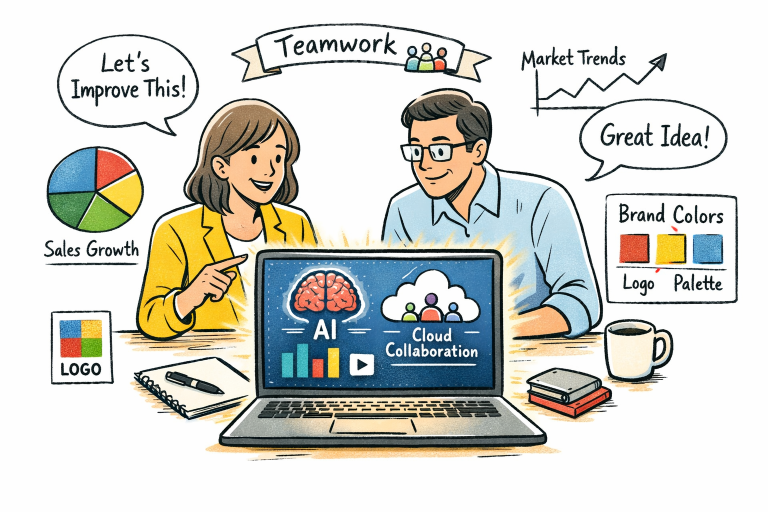
Workplace collaboration has shifted to be more dynamic and distributed, requiring tools that support seamless teamwork. Many smart presentation solutions support cloud-based editing and sharing. Multiple contributors can now make live edits, offer comments, and track changes in real time, greatly enhancing efficiency and reducing the confusion that comes with version control. Cloud features not only make teamwork easier but also provide a platform for feedback and training, as everyone can see updates and offer suggestions in real time. This means better presentations are created faster, with less back-and-forth and fewer errors.
Presenting data in a way that is both accurate and visually compelling is key to decision-making. Smart presentation tools help users transform raw statistics into easy-to-understand visuals, such as charts, infographics, and dashboards. AI guides users toward the best methods for illustrating their data, automatically suggesting graph types and even highlighting trends. This capability not only enhances audience comprehension but also ensures that data is never misrepresented through improper graphing or poor formatting. With better data visualization, meetings and proposals become more persuasive and actionable.
Today’s workplaces are increasingly remote and digitally focused. Smart design tools integrate with many platforms and formats, enabling presentations to be created, edited, and viewed from anywhere. They support sharing across a variety of digital environments to ensure accessibility, regardless of where the audience is located. Such flexibility is vital as businesses become more global and distributed, enabling consistent communication and engagement across teams regardless of geography or device.
As AI continues to evolve, the next generation of smart presentation tools will offer ever more sophisticated features. Future platforms may fully personalize suggestions based on user behavior and previous projects, or employ technologies such as augmented reality (AR) or virtual reality (VR) to create immersive presentation experiences. These advances will transform not just how we design presentations, but how we interact with information altogether, ushering in a new standard for digital communication.
Smart presentation design tools are fundamentally improving the way organizations create and deliver information. By empowering professionals to produce attractive, data-driven, and brand-consistent slides easily, these solutions accelerate communication and drive collaboration. As digital workplaces continue to evolve, embracing these innovations will be critical to staying relevant and successful.

Ameer Hamza is a versatile content creator with a strong interest in researching and writing on a wide range of topics. His work spans technology, business, health, travel, lifestyle, education, entertainment, finance, and digital trends. He focuses on transforming complex information into clear, engaging, and easy-to-understand content that provides practical value to readers. By relying on credible sources and thorough research, Ameer strives to produce accurate, informative, and up-to-date articles that help readers stay informed and make better decisions.