Introduction
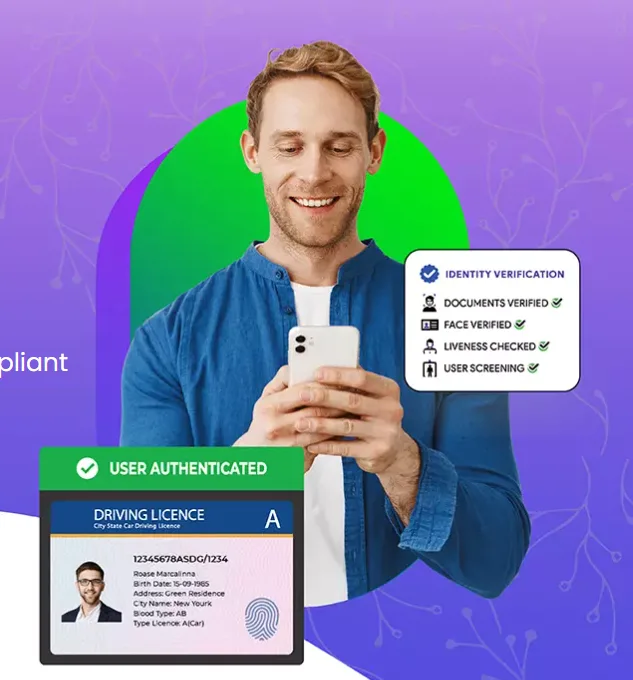
As digital transactions continue to grow, businesses need reliable methods to verify user identities and prevent unauthorized access. Traditional authentication methods, such as passwords and one-time passwords (OTPs), may be vulnerable to phishing, credential theft, and impersonation. Face liveness check and voice biometrics are emerging technologies that help organizations strengthen digital identity verification by analyzing facial presence and unique voice characteristics.
When integrated into a comprehensive identity verification system, these technologies can help businesses create secure, convenient, and user-friendly authentication experiences.
What Is a Face Liveness Check?
A face liveness check is a biometric security process that determines whether the face presented during verification belongs to a real person who is physically present or comes from a spoofing attempt. It helps protect digital onboarding and authentication systems against fraudulent activities involving printed photographs, replayed videos, masks, and certain presentation attacks.
Modern face liveness detection solutions may use artificial intelligence (AI), computer vision, motion analysis, and texture assessment to examine facial characteristics. Depending on the implementation, the system may also analyze depth, reflections, or other visual signals to distinguish a live face from a simulated representation.
Face liveness checks are particularly useful for banking applications, financial services, digital KYC, online account opening, employee verification, and other platforms that require identity confirmation. By adding a liveness layer to facial verification, businesses can reduce exposure to impersonation attempts.
Understanding Voice Biometrics
Voice biometrics is an authentication technology that analyzes distinctive characteristics of a person's voice to help verify their identity. Unlike conventional voice recognition, which focuses on understanding spoken words, voice biometrics examines speaker-specific features such as vocal patterns, pitch, rhythm, and speech characteristics.
AI-powered voice biometric systems compare a live voice sample against an enrolled voice profile to estimate whether the speaker matches the claimed identity. Depending on the solution, additional safeguards may be required to detect recorded speech, synthetic voices, or AI-generated audio.
Voice biometrics can support secure customer service interactions, telephone banking, contact centre authentication, remote access management, and digital identity verification. It can also help simplify authentication by reducing dependence on repeated passwords or security questions.
Benefits of Combining Face Liveness Check and Voice Biometrics
Integrating facial liveness detection with voice biometrics can provide an additional layer of protection for identity-sensitive workflows.
Key benefits include:
- Enhanced identity assurance: Combines visual and voice-based biometric signals to support more comprehensive verification.
- Fraud prevention support: Helps detect certain facial spoofing and voice impersonation attempts when appropriate anti-spoofing controls are implemented.
- Convenient authentication: Enables remote identity checks without requiring every interaction to rely on manual document reviews.
- Improved digital onboarding: Supports streamlined customer registration and identity verification processes.
- Scalable security: Helps organizations manage authentication across digital platforms and customer service channels.
However, biometric technologies are not completely foolproof. Their effectiveness depends on implementation quality, testing, presentation-attack detection, and the security of the overall verification process.
Applications Across Industries
Financial institutions can use these technologies to strengthen digital KYC and remote account access. Fintech companies can integrate face liveness checks into customer onboarding, while enterprises can use biometric authentication as part of workforce access management. Healthcare providers and digital service platforms may also use biometric verification to help protect sensitive accounts.
Organizations should implement appropriate consent mechanisms, encryption, access controls, retention policies, and alternative verification options to protect biometric information and accommodate users who cannot complete a biometric check.
Conclusion
Face liveness check and voice biometrics are important components of modern digital identity security. By assessing facial authenticity and distinctive voice characteristics, these technologies can help organizations strengthen authentication, improve onboarding efficiency, and address selected forms of identity fraud.
For businesses adopting AI-powered identity verification, combining biometric checks with document validation, risk-based security controls, and responsible data handling can support a more secure and trustworthy digital experience.