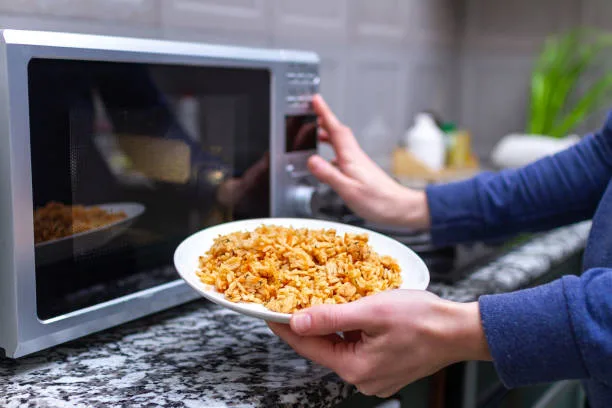
Microwaves are a form of electromagnetic radiation that is a wave composed of electrical and magnetic energy. These radiations extend a broad spectrum of waves that range from long radio waves to short gamma rays. The microwaves are used in a large variety of ways, as they are used to detect speeding cars and enhance telephone and television communications. In industry, the use of microwaves is extensive; the most common use of microwaves is microwave ovens that are used in cooking and baking.
They are reflected by the metals that are passed through different materials and are absorbed by foods. The microwaves are usually produced inside the ovens by an electron tube called a magnetron. The microwaves cause the water molecules that are present in food to vibrate and produce the heat in the food. The energy of the microwaves is converted into heat energy, and it does not make the food radioactive.
Advantages
- Convenient source of heating food
- Energy efficient
- Space-saving design
- High directivity
- Reliable for remote locations
Disadvantages
- Potential health risks
- Potential of leaked radiation
- Short life span
- Uneven taste and texture
- Central Nervous System (CNS) effects
Advantages of microwaves
Microwaves are used in lots of ways; the main use of microwaves is in cooking in a microwave oven. The advantages of microwaves are discussed below.
Convenient source of heating food
Microwave ovens are used for heating food quickly; it is a safe and less complex process. The microwave-safe dishes are used for this; in this way, the food straight from the freezers can be heated. It is a time-effective process of heating the food.
Energy efficient
Microwave ovens use less heat than other conventional ovens as they heat the food quickly and do not require pre-heating, which saves electricity and time for a person. This is the best option for users who want to cut down the energy they use.
Space-saving design
The microwave ovens significantly take up less space as they are smaller in size and can be selected based on the space present in the house. Its outer body does not get heated while using it, which is why it is considered a safe option.
High directivity
The microwaves have a short wavelength that helps them to be focused into narrow beams in terms of communication. The narrow bands prevent the interference of these waves with other equipment. That's why it is used for satellite and radar communications.
Reliable for remote locations
The microwave radiation is a stable network connection source in remote areas where the fibre optic cables are impractical to implement, so these are used in cell networks as an inexpensive and reliable source.
Disadvantages of microwaves
The microwaves radiations also offer some disadvantages that are essential to consider. The disadvantages of microwaves are discussed below.
Potential health risks
According to the research, microwaves pose a significant health risk when ingesting food that is microwaved. These are the additives that add to the food when it is heated, and these plastics disturb a person.
Potential of leaked radiation
When the microwave got damaged, it increased the potential that these radiations could leak out of it. This causes a significant threat to a person.
Short lifespan
The microwave ovens are considered to have a short life expectancy compared to other kitchen appliances, because they can face the problem with a lack of heat output and mechanical problems that require repair and replacement.
Uneven taste and texture
The food that is heated in a microwave oven is usually heated unevenly and has a slightly different taste and texture. It also leaves the hot and cold spots in a food that people usually find unpleasant and poses certain health risks.
Central Nervous System (CNS) Effects
The high exposure to microwave radiation increases the chances of getting the CNS disease. The prolonged and high-intensity exposure impacts the learning abilities and memory of a person and damages the brain signalling processes.
In conclusion, microwaves offer both advantages and disadvantages that are essential to consider. These are used in lots of places, including communication and cooking. Microwave ovens are useful in cooking as they are a convenient method, but they offer a potential risk and have the potential for diseases. Therefore, it is essential to make sure that people use it correctly and take advantage of it.