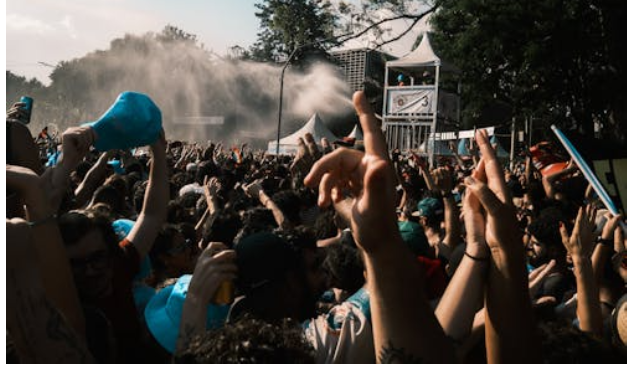
Music festivals don’t start as big ideas. Usually, it’s a field, a park, sometimes a blocked-off street where someone decided sound should spill out instead of staying contained. That matters. Because the first thing that happens isn’t music, it’s proximity. People arrive carrying their own routines, private moods, separate schedules—then suddenly they are standing next
to strangers, shoulder to shoulder, adjusting to shared noise, shared space, shared time. It’s basic, but it works. Communities don’t appear out of agreement; they appear out of repeated contact, and festivals force that contact in a way that daily life avoids.
In places like Colorado, where towns stretch into mountains, and people can feel spread out, festivals act like temporary centers. A gathering point that didn’t exist yesterday. Someone
drives in from a nearby county, someone walks from two blocks away, and someone else flew in and doesn’t know the streets yet. They stand in the same line for food, hear the same set,
and react at the same moment. That overlap is small, but it accumulates.
Music doesn’t work like conversation—you don’t need agreement to fall into the same rhythm. A bass line hits, a violin rises, drums cut through, and people react at once without explanation;
uncoordinated, yet briefly aligned. It isn’t deep unity, just a temporary connection—but it still carries weight.
Festivals build weak ties, not real friendships yet—more like recognition. You start seeing the same faces, the vendor remembers you, the volunteer repeats directions, then laughs; small,
low-effort interactions. It doesn’t ask much, but it shifts the space
Some events lean quieter. The Boulder, Colorado classical music festival, for example, doesn’t rely on spectacle or volume. It sits in a town already known for outdoor life, hiking trails, and a
kind of calm intensity. The festival folds into that environment instead of disrupting it. People bring blankets, sit close but not crowded, and listen more than they talk. Yet the effect is similar
to louder festivals—neighbors who might not meet otherwise end up sharing space, trading small comments between pieces, recognizing each other the next evening. The location matters
here. Boulder isn’t anonymous; it’s structured by its geography, mountains pressing in, paths crossing. So the festival doesn’t just gather people, it reinforces an existing pattern of
closeness, but makes it visible. You notice who else is there.
There’s also the practical side. Festivals pull in small businesses, food trucks, local artists, and temporary staff. Money moves, yes, but so does coordination. Permits are issued, streets are
managed, waste is handled, and schedules are negotiated. None of that is glamorous. Yet it requires cooperation across groups that might not usually collaborate: city officials next to
independent organizers, local residents next to visiting crews. They solve problems quickly because the timeline is fixed. The event is happening whether everything is ready or not.
That pressure creates a kind of forced teamwork. Not perfect. Sometimes messy, sometimes tense. But it leaves behind a record of having worked together. Next time, it’s easier.
And people notice who contributed. Recognition spreads quietly. This vendor showed up early, that crew handled sound issues, and someone helped clean up after the crowd left. These small
reputations matter more in tight communities than formal titles do.
A festival alters how space is used. A park becomes a stage. A parking lot becomes a dance area. Streets shift from transit routes to gathering zones. When space changes function,
behavior follows. People linger longer, talk more freely, and approach strangers without the usual hesitation. The environment signals that interaction is expected, or at least allowed.
This doesn’t happen evenly. Some people stay on the edges, watching. Others move toward the center. But even the observers are part of the shared environment; they’re seen, they see
others. That mutual visibility builds a kind of soft accountability. People act differently when they feel part of a crowd that isn’t anonymous.
Yet anonymity isn’t fully gone. That’s part of the appeal. You can engage or withdraw. Join a conversation, then step away. The balance is loose.
When the festival ends, the physical setup disappears quickly. Stages are dismantled, trash cleared, and streets reopened. It can feel like nothing remains. But the social traces linger.
People who met might follow each other online, or simply recognize each other in passing weeks later. Businesses that connected might collaborate again. Organizers carry lessons forward.
The effect is subtle. You don’t see a new institution appear overnight. Instead, there’s a slight shift in how people relate to their environment and to each other. A bit more familiarity. A bit less distance.
And maybe that’s enough.
Because communities don’t require constant intensity, they need periodic moments where people are brought together—intentionally or not—then allowed to drift apart again. Festivals
provide those moments. Not perfectly organized, not always smooth, sometimes uneven and rough around the edges.
But they work.

This post has been published by the admin of our website, responsible for content management, quality checks, and providing valuable information to our users.


