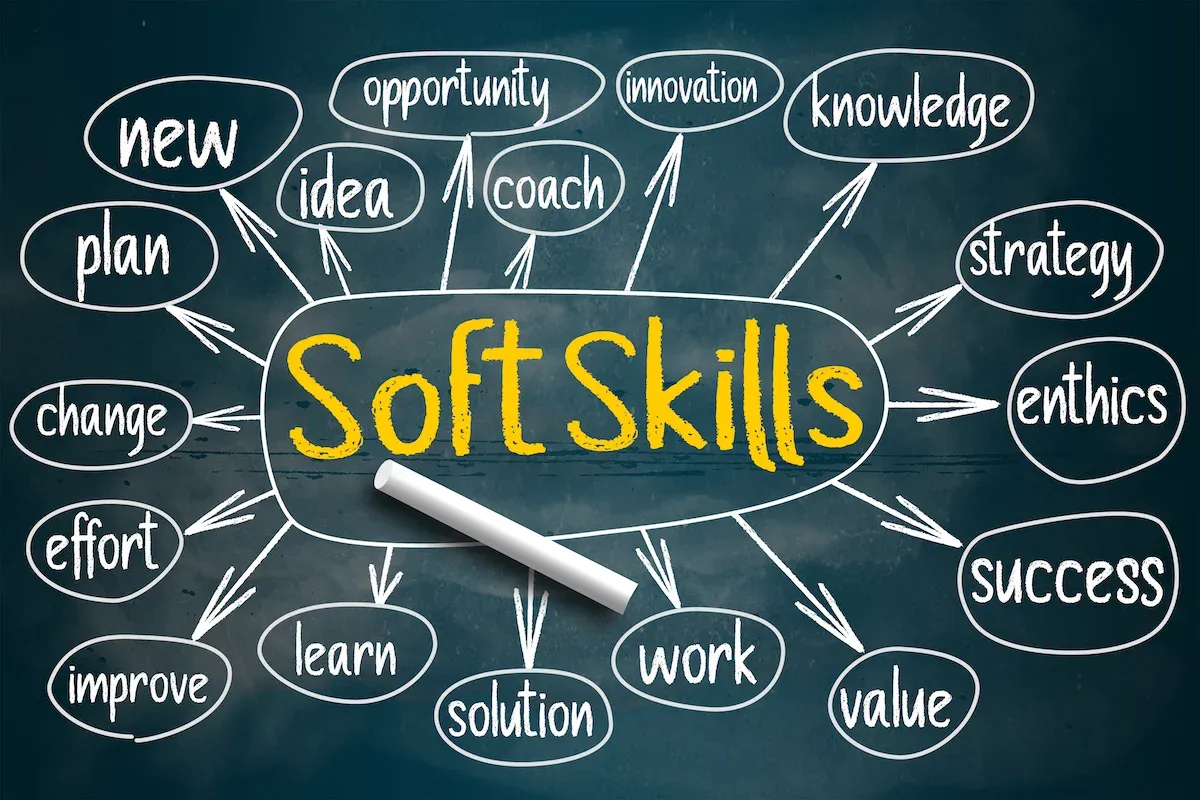
With more integration of artificial intelligence in daily operations, human wisdom will become increasingly vital. There is no way we can do away with such human qualities as empathy, patience, good communication, and trust. Online courses for soft skills will allow students to develop self-awareness and improve their relationships with people through the use of AI technology.
- Understanding Emotional Intelligence in the Age of AI: Emotional Intelligence includes having the capacity to sense our own emotions, having the capacity to understand other people's emotions, and responding to those emotions in the proper way. The processing speed of AI in terms of processing data is very fast, but human beings bring a personal touch to the process of communication. With emotional intelligence training, we can accomplish this equilibrium.
- Acknowledgment of Your Emotions: The learners are advised to use online classes, reflection, and practical experiences in order to know how their emotions are shaped. In this case, the learner acknowledges that his emotions are affected by stressful working days, but at the same time, he experiences motivating emotions as a result of constructive criticism. He will have the ability to reason and behave rationally.
- Empathy Training via Practical Experience: Empathy allows a person to see things from other people’s point of view. Online courses can capitalize on experiences pertaining to work settings, where the learner will be required to enact certain situations which apply to all humans. The learners can then be trained to respond to a nervous colleague or assist a fellow colleague in tough times.
- Communication along with AI Applications: While helping with the writing of e-mails, report making and thinking process, the significance of emotional intelligence comes into picture in the context of communication. The student gets a chance to learn how to use correct language and adapt according to the audience. As an example, when giving feedback on the employees to the manager, the feedback should be given with the help of facts and encouraging words.
- Building a More Effective Response to Workplace Stress: The knowledge about emotional intelligence will help to manage stress with the help of patience and concentration. The online learning activities will include breathing exercises, meditation exercises, and some tips which can be used during difficult communication. The learners will have the opportunity to analyze various situations at work and responses to them.
- Practising Emotional Intelligence Through Digital Learning: The online course presents an opportunity to employ emotions in learning by means of quizzes, videos, stories, and other forms of activity. The scenario can show a situation where the participant must make action if his teammate is being neglected or if his client needs help. The options and the outcomes of these options can be analyzed. This is the type of training that can be linked to both theory and practice.
- Putting Emotion Intelligence into Practice Every Day: Emotional intelligence can be gained from taking tiny steps over a certain period of time. Active listening can be achieved when people attend meetings, pause before sending emails, and ask appropriate questions. They may even reflect on themselves after major discussions. This is because they will be able to apply what they have learned in class in the digital world.
In conclusion, the application of the emotions guarantees that people make proper use of the traits including empathy, understanding and reasoning due to technology. It is the soft skills training for employees which enables them to train other people regarding empathy, communication, self-awareness and collaboration. All these traits together with ethical artificial intelligence give rise to companies where technology improves the performance of humans.