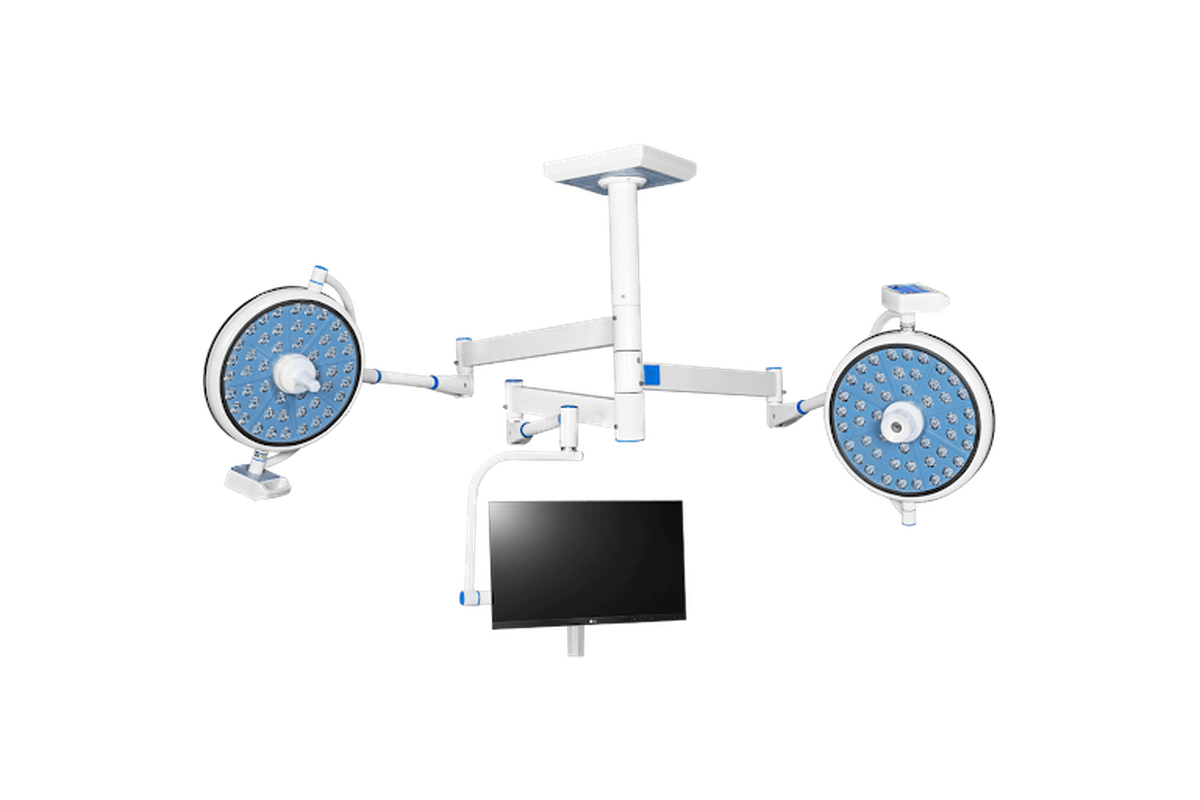
Replacing an operation theatre light is a small construction project as well as an equipment purchase. The new system has to fit the structure above the ceiling, move around the existing equipment and be handed over without leaving the clinical team with unresolved installation questions. For a Delhi hospital renovating an established theatre, the most useful first document is a room survey rather than a price comparison.
That survey gives an OT light manufacturer in Delhi a clear brief. It also helps the hospital identify civil work, electrical preparation and operational decisions that would otherwise surface after delivery. The objective is a lighting installation the team can use and maintain in the room it actually has.
Product images from Ventek India
Start with a measured drawing showing the operating table, ceiling height, doors, supply pendants, monitors and fixed storage. Record both the finished ceiling level and the structural mounting surface above it. A decorative ceiling panel cannot be assumed to carry the mounting load. The proposed support and fixing arrangement need approval from the hospital's qualified engineering team.
Photograph the present installation and label its mounting point, electrical connection and accessible service space. If the old equipment is being removed, establish who will isolate it, dismantle it and restore the surrounding finishes. A quotation that covers only the new light may leave these activities outside the supplier's scope.
Ask the clinical team which procedures the theatre regularly handles and where staff normally stand. The engineering team should record lighting controls, power arrangements and restrictions on mounting locations. These are planning inputs, not instructions to change clinical positioning or established hospital procedures.
A demonstration should reflect that agreed brief. Ask an LED OT light manufacturer in Delhi to show the proposed configuration rather than a different model with more features. Check whether the quoted handles, control panels and mounting arms are the ones being demonstrated. Record any differences before comparing offers.
The light head needs a useful working range, but the arm also needs a safe parking position. Draw the space swept by the complete assembly and compare it with monitor arms, pendants and the anaesthesia area. A light that clears every obstruction when centred may still conflict with other equipment when moved aside.
Include the staff who clean the room in the review. Ask how accessible surfaces, handles and joints are cleaned using the manufacturer's instructions and the hospital's approved process. Identify any parts that must be removed, replaced or sterilised. A clear cleaning method is more useful than an unsupported claim that a fitting is maintenance free.
Request an itemised scope covering the light, mounting assembly, transport, installation, commissioning and training. List any ceiling reinforcement, access panel, electrical work or painting separately. Confirm which organisation supplies each item and who approves it before the installation date.
Power planning should be based on the quoted model and the hospital's electrical design. Ask for its connection requirements and for a written explanation of any backup option. Do not assume that an optional battery, remote control or camera is included because it appears in a catalogue photograph. The Ventek OT light range can help buyers identify the configuration they want to discuss.
Agree the sequence for access, removal, mounting, electrical connection and commissioning. The hospital should decide when the room is taken out of service and when it can return to use under its own approval process. Include time for engineering checks, cleaning and staff familiarisation rather than treating the delivery date as the completion date.
The acceptance record should identify the installed model and serial number, the supplied accessories, any outstanding work and the people trained. Collect the operating instructions, cleaning instructions, warranty terms and service contact. Photograph the completed installation for the equipment file without including patient information.
A retrofit proposal is easier to assess when the equipment and site responsibilities appear in one written scope. Before appointing an operation theatre light manufacturer in Delhi, resolve the ceiling design, movement clearance, installation exclusions and handover requirements. These details give the hospital a practical basis for comparing quotations and scheduling the renovation.
The purchasing team can then choose a configuration with a documented place in the room, an agreed installation route and a named service contact. That is a stronger starting point than discovering the missing work after the light has arrived.

This post has been authored and published by one of our premium contributors, who are experts in their fields. They bring high-quality, well-researched content that adds significant value to our platform.