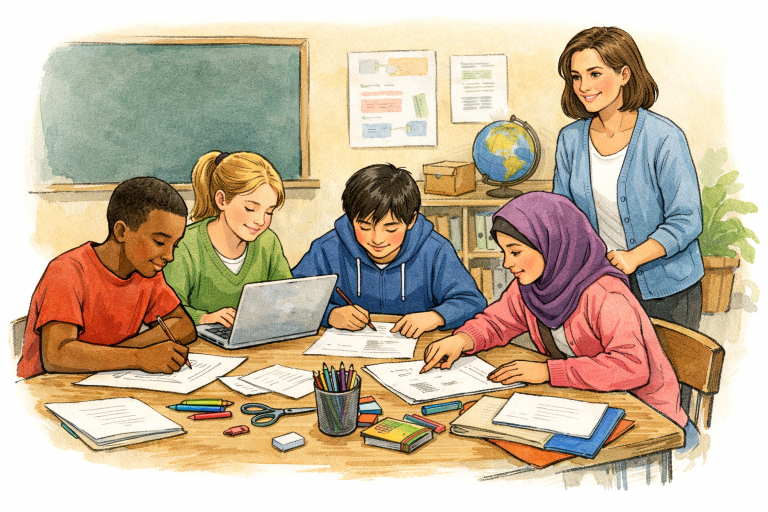
Project-Based Learning (PBL) is an instructional methodology that encourages students to gain knowledge and skills by working on complex, real-world projects over an extended period. Instead of relying on traditional rote memorization, students in PBL environments participate in deep exploration, collaboration, and critical thinking as they tackle meaningful problems. This approach is transforming classrooms, particularly within gifted education programs, where the need for challenge and intellectual engagement is paramount.
At its core, PBL places students at the helm of their learning journey, fostering a sense of ownership while empowering them to see the impact of their work in authentic contexts. It establishes a link between what students learn in class and the skills they need beyond school, bridging academic concepts with practical application.
Teachers serve as facilitators in PBL, guiding students through the discovery process rather than simply dispensing knowledge. With students taking an active role, motivation increases, and learners are better equipped to develop perseverance and resilience as they encounter—and solve—challenges along the way.
A well-constructed PBL curriculum emphasizes real-world relevance, helping students connect classroom learning to their lives outside of school. This structure also allows learners to dive deeper into subjects, leading to greater retention and understanding.
The adoption of PBL in educational settings brings a wealth of advantages for both students and educators:
Creating truly impactful PBL experiences involves several key steps:
Technology is an essential tool in modern project-based classrooms. Digital resources provide students with access to a wealth of information, facilitate collaboration, and enable innovative project presentations. Platforms like Google Workspace, Flip, and Padlet can be utilized to organize project workflow, communicate results, and document learning. These tools not only enhance project outcomes but also prepare students for digital literacy and technological fluency in their future careers. For insights on leveraging technology effectively in education, consider TeachThought's resources.
One of the most powerful components of PBL is its ability to break down the barriers between subjects. Interdisciplinary projects invite students to solve complex problems that require skills and content knowledge from multiple disciplines. For example, a PBL unit on community sustainability might blend science (analyzing environmental impact), mathematics (using data and statistics), and language arts (writing persuasive campaigns). These cross-curricular experiences lead to robust understanding and simulate how problems are approached outside of academia.
Assessment in project-based learning environments extends far beyond a traditional test. Comprehensive evaluation strategies include:
These well-rounded methods ensure that both the journey and the learning outcomes are valued and documented.
While the advantages of PBL are clear, implementation comes with its own set of challenges. Teachers may struggle with time constraints, limited resources, or balancing the needs of different learners within a single project. Success in PBL often requires careful advance planning, ongoing flexibility, and a willingness to adapt as projects evolve. School leaders can support teachers by providing professional development and encouraging collaboration across disciplines.
Project-Based Learning stands out as a dynamic, student-centered approach that bridges the divide between academic knowledge and real-world application. Education delivered through PBL is more engaging, relevant, and memorable for students, while equipping them with skills vital for the 21st century. When thoughtfully implemented, this methodology supports the creation of meaningful and transformative experiences that prepare learners not just for tests but for life itself.

Ameer Hamza is a versatile content creator with a strong interest in researching and writing on a wide range of topics. His work spans technology, business, health, travel, lifestyle, education, entertainment, finance, and digital trends. He focuses on transforming complex information into clear, engaging, and easy-to-understand content that provides practical value to readers. By relying on credible sources and thorough research, Ameer strives to produce accurate, informative, and up-to-date articles that help readers stay informed and make better decisions.